Urban Transit for Khartoum : Phase 1 – 3 Routes
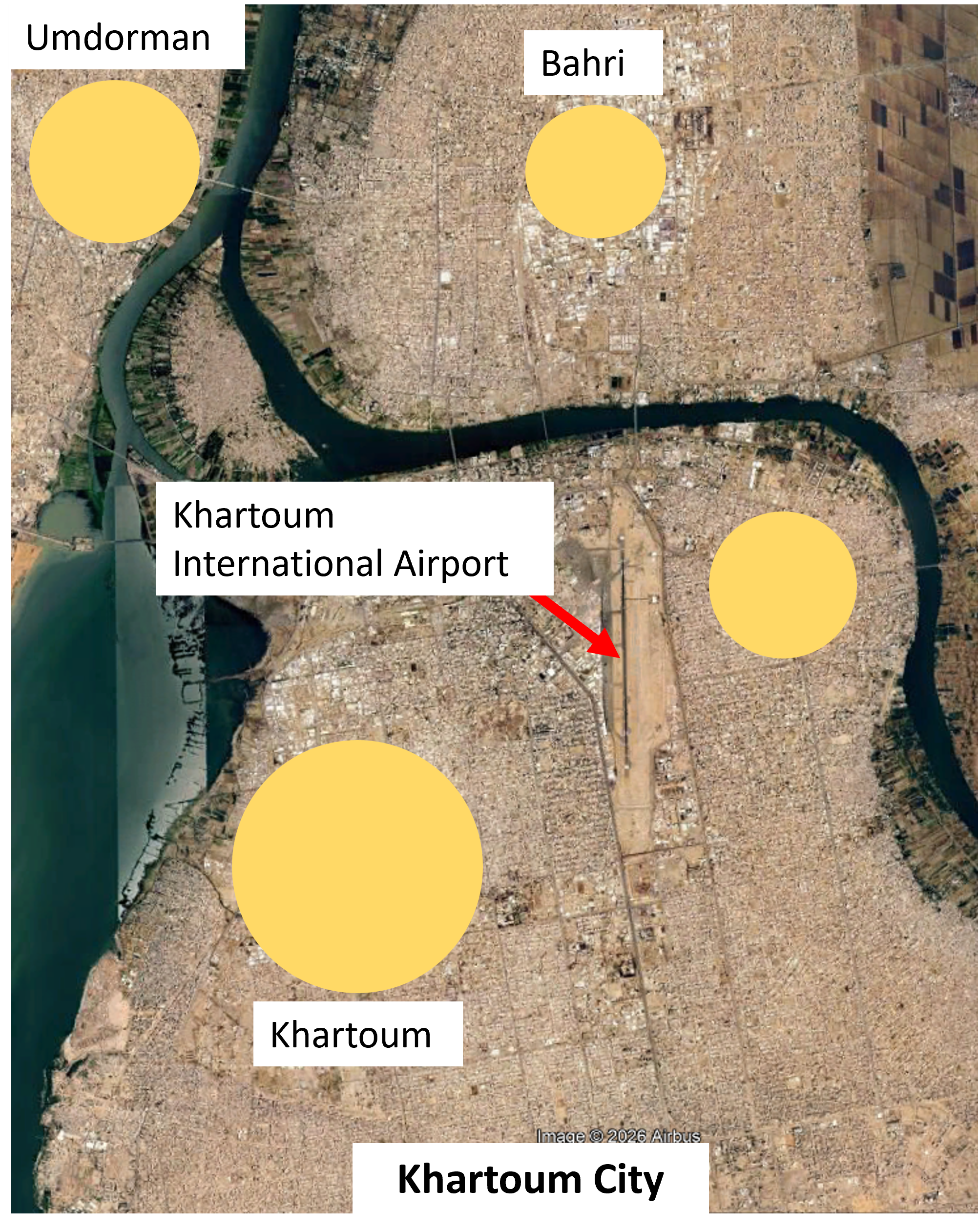
Khartoum, the capital city of Sudan, is characterized by its unique geography, with the Blue Nile and White Nile converging at the city’s heart. The city’s growing population, limited road infrastructure, and the physical barrier posed by the rivers demand a diverse and efficient urban transit system. Three primary modes of transport that could help meet Khartoum’s urban mobility needs are Trams, Buses (including Bus Rapid Transit, or BRT), and River Taxis. Each mode has its own set of advantages and challenges depending on passenger comfort, satisfaction, and return on investment (ROI).
1. Trams – A Sustainable Urban Solution
Description:
Trams are a well-established form of mass transit in many cities around the world, offering a relatively efficient and environmentally friendly mode of transport. In Khartoum, tram systems could operate on dedicated tracks running through major urban corridors. Due to the river’s natural division of the city, tram lines could connect key urban zones across bridges or tunnels, providing a seamless travel experience for commuters.
ROI and Passenger Comfort:
- Return on Investment (ROI):
The initial capital investment for building tram systems is typically high due to infrastructure requirements (tracks, stations, trams), but once in place, they offer high capacity and relatively low operating costs. ROI depends on factors like fare collection systems, operating efficiency, and the ability to attract ridership. In a dense city like Khartoum, the long-term ROI could be high if the system runs efficiently.- Expected ROI Range: 6-12 years before profitability.
- Passenger Comfort:
Trams are generally designed for comfort, with air conditioning, wider seats, and accessibility features. Since Khartoum experiences high temperatures, air-conditioned trams would likely increase satisfaction, making them an attractive option for commuters.- Comfort Rating (Scale 1-5): 4/5 – due to air conditioning, spaciousness, and smooth travel.
- Satisfaction:
Passenger satisfaction is likely to be high, especially in terms of reliability and regular service. However, concerns might arise regarding delays due to infrastructure issues, especially during peak hours.- Satisfaction Rating: 4/5.
Summary: Comparative Analysis
| Transit Type | Initial Capital Investment | Operating Costs | Passenger Comfort | Return on Investment (ROI) | Passenger Satisfaction |
| Trams | High | Medium | 4/5 | 6-12 years | 4/5 |
| Buses (BRT) | Medium | Low | 3/5 | 4-6 years | 3.5/5 |
| River Taxis | Medium | Medium | 3.5/5 | 5-7 years | 4/5 |
PURCHASE ONLINE
Choose you field and get started using our latest tools